
LBW is five conditions, and your side argues about one of them
Everybody at square leg is certain. Law 36 sets five tests, and the shouting usually covers about one and a half.
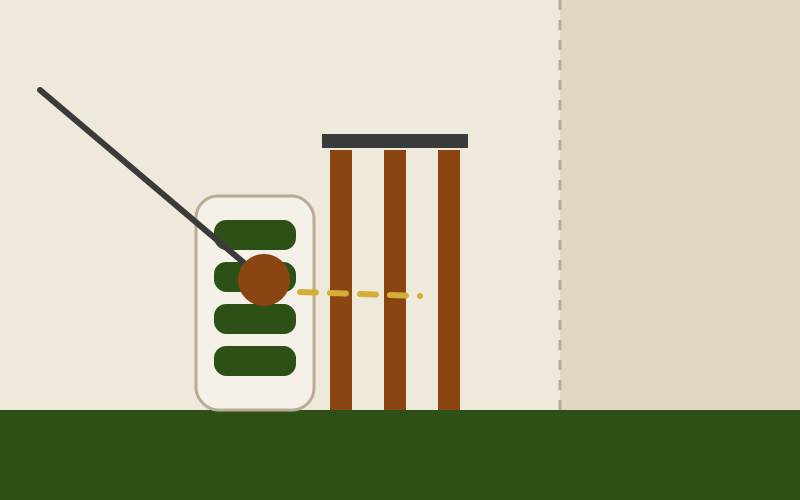
The appeal goes up, the finger stays down, and the bowler spends the walk back to the mark explaining to nobody in particular that it was hitting halfway up. They may even be right about that. It is also the one part of the decision that was never really in doubt.
Law 36 asks five questions and they all have to answer yes. Here they are, in full.
36.1.1 the bowler delivers a ball, not being a No ball
36.1.2 the ball, if it is not intercepted full-pitch, pitches in line between wicket and wicket or on the off side of the striker's wicket
36.1.3 the ball not having previously touched his/her bat, the striker intercepts the ball, either full-pitch or after pitching, with any part of his/her person
36.1.4 the point of impact, even if above the level of the bails, either is between wicket and wicket or if the striker has made no genuine attempt to play the ball with the bat, is between wicket and wicket or outside the line of the off stump
36.1.5 but for the interception, the ball would have hit the wicket.
MCC Laws of Cricket, Law 36.1
The one that ends most appeals
Pitched outside leg. That is 36.1.2, and it does not care how plumb the rest of it looked. A ball that lands a centimetre outside leg stump and then knocks middle out of the ground is not out, and it never has been, and every season somebody at your club is amazed by this.
Worth being precise about what the clause actually says, because it is not symmetrical. Pitching in line is fine. Pitching outside off is fine. Only leg is fatal, and only if the ball pitched at all: a full toss that hits you on the full has no pitch to be outside.
The one that catches batters
Clause 36.1.4 has a second half. If the striker has made no genuine attempt to play the ball with the bat, impact outside the line of off stump still counts. So padding up in the corridor is a decision to be given out on a delivery you would otherwise have survived. That is what the clause is for.
Note what it does not say. Nothing in Law 36 mentions height, or how far down the pitch you are, or whether you were on the front foot. Those are rules of thumb umpires use to judge 36.1.5, and they are not in the Law.
Two more that settle arguments
Only the first interception counts, under 36.2.1. Pad then bat is pad. And if the ball hits bat and body at the same instant, 36.2.2 treats it as having touched the bat first, so the appeal dies there.
Then the one everybody imports from television. Umpire's call is not in the Laws. It belongs to the review protocol in the playing conditions of matches that have reviews, which your Saturday game does not. In club cricket there is one judgement and it is the umpire's, all of it, with no margin drawn on a screen afterwards.
What to do with all this
Bowlers: stop appealing for the ones that pitched outside leg. Every wasted shout costs you a fraction of the next real one, and the umpire has already noticed you appeal for everything.
Batters: play at it. The Law is written to punish the pad, and 36.1.4 is the clause that does it.
The short version
Five conditions, all of them at once. Pitched outside leg is never out. No genuine attempt to play it removes your protection outside off. Everything else is the umpire judging where it was going.