
Rotating the strike is a habit, and your club has lost it
The overs where nothing happens are the overs that lose the game.
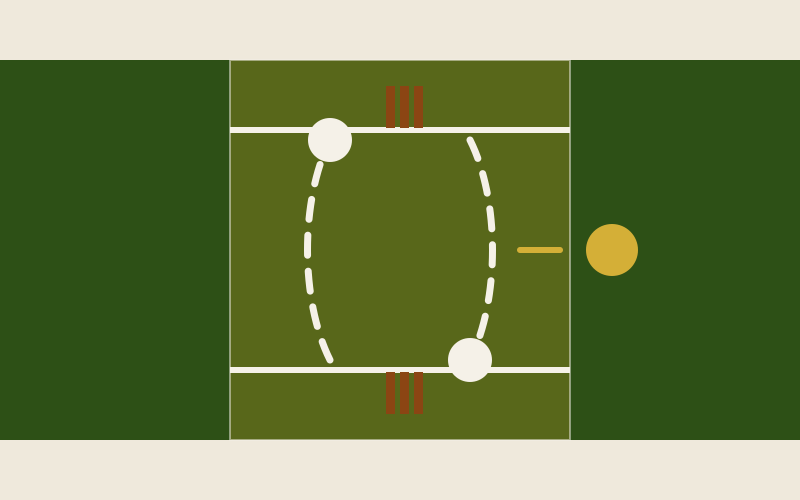
Sit at fine leg for an hour of a Saturday chase and count the dot balls. Not the wickets. Not the boundaries either, because everybody counts those. Count the deliveries where nothing at all happened, and you will have the story of the innings before tea.
A side chasing 190 rarely loses to a spell of genuine quality. It loses because eleven balls went by with two runs on them, the rate crept from six to eight while nobody looked up, and then somebody tried to fix the whole thing with one swing.
The single is a decision, and it keeps getting turned down
Most dots at club level are not the bowler's doing. They are a batter choosing the shot they fancy over the run that was sitting there. Ball into the pads, midwicket up, and instead of a nudge and a jog there is a heave through the line and a thick inside edge back to the bowler. Nothing scored. Nothing learned.
Watch the good players in your league. They are not hitting it harder than you. They are hitting it into the space where nobody is standing and setting off, and they do it about fifteen times an hour.
Three things that stop it
The first is calling. Half of club cricket is two batters staring at each other for a beat and a half, which is exactly long enough to turn a comfortable single into a suicidal one. The call belongs to whoever can see the ball. Say it early, say it loudly, and say the same three words every time.
The second is backing up. The non-striker who stands rooted with the bat inside the crease until the ball is hit has already given away a yard, and a yard is the difference between a single and a run out. Move as the bowler loads, and keep moving.
The third is fear. One bad run out in April and a middle order will refuse anything tight for a month. That is understandable and it is still costing you games, because the alternative is a middle order that can only score in fours.
How to get it back
Give it ten minutes at training, before the nets, while everyone still has the energy to run. Two batters, one bowler, and one rule: every ball has to be called, out loud, by the player who can see it. No shots to the boundary count. It feels ridiculous for about four minutes and then people start moving.
The other habit worth building is the second run. Most club sides turn one into one. A batter who turns and looks, every single time, will find a second twice an innings, and that is a fifty-over game where you scored sixteen more than the other lot for no extra risk.
Then there is the number that nobody tracks. Get somebody to write down your dot balls faced for a whole innings. It is the most useful and most annoying statistic in club cricket, and it will tell you more about your batting than an average will.
The short version
Boundaries are the fun part and they are not the part you can rely on. The single is available almost every ball, it costs nothing, and your side has quietly stopped taking it.